Ian’s Story: From Lost to Leader — The Cascade Way
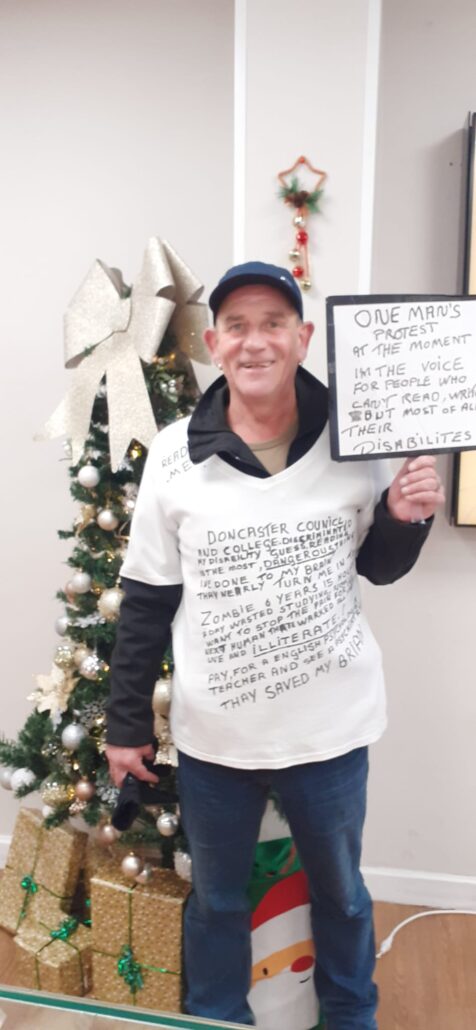
When the Cascade Health & Learning Hub first opened, we were still painting the rooms. Volunteers were few, but the vision was strong: a space where people could learn, heal, and rebuild. That’s when Ian Curry walked through the door — full of energy, but carrying grief and uncertainty.

Ian was an ex-miner, diagnosed with dyslexia at school and never taught to read or write. After the death of his father — the man who had helped him start businesses and navigate life — Ian found himself lost. He’d been sent to the Job Centre, and just a week earlier, visited another charity that asked him to run errands, pick up sand, and deliver materials. But Ian knew he had more to offer.
When we sat down for his interview, he was surprised. I hadn’t asked him to do any jobs. Instead, we talked — about his grief, his goals, and what Cascade could
offer. Ian needed to learn to read, write, and use computers. We made a deal: he’d help with plumbing, doors, radiators, and in return, I’d teach him — gently, patiently — and help him rebuild his confidence.

And he did.

Ian became a peer mentor, helping others while learning himself. He ran the centre at times, supported men in court, and led small groups where he shared his journey. He moved from course to course, growing stronger with each step. After two years, he felt ready to tackle college — and with our blessing, he went.

But college wasn’t ready for Ian.

He found that teachers looked down on him, laughed at his ideas, and dismissed the alternative learning methods that had helped him thrive at Cascade. They didn’t understand dyslexia. They weren’t ready to see what Ian could see. His confidence began to crumble.

He returned to the doctors. He was prescribed antidepressants, referred to a psychiatrist, and began seeking support from America, where he found research, funding, and resources that validated his experience.

Then Ian did something extraordinary.

He stood outside that college with banners and shirts, boldly declaring what he felt about their teaching methods — how they made people feel small, misunderstood, and broken. He sent me the photos. He spoke about The Cascade Way of Learning. Even through trauma, he had come through the other side.

Ian’s story is not just about recovery — it’s about resistance, resilience, and the power of being truly seen.
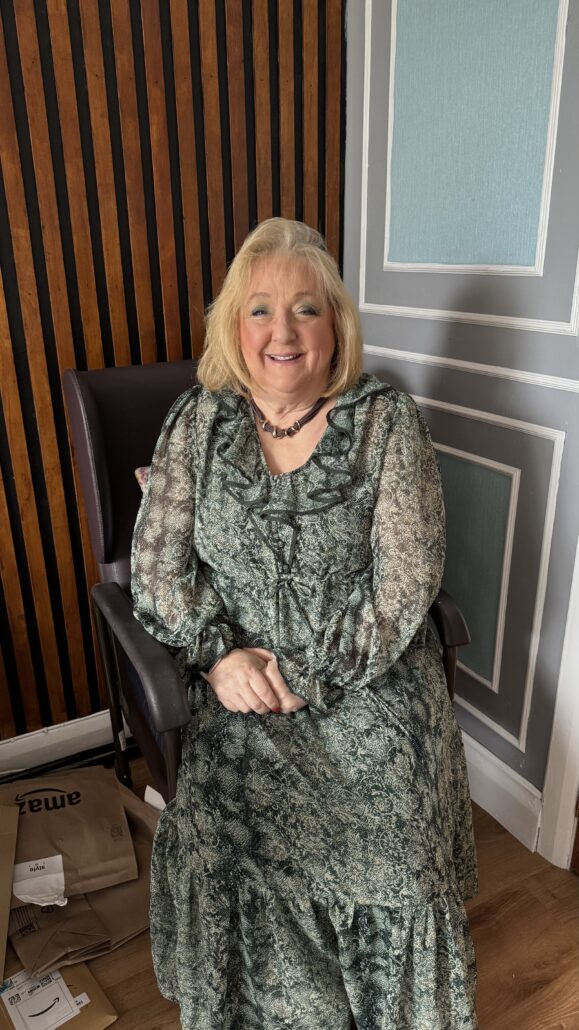
Still Here to Tell the Tale: My Journey Through Illness, Loss, and Purpose

By Jacqueline Hewitt-Main, OBE

Four years ago, I had to step away from the work I loved — not by choice, but because of chronic illness. I retired, reluctantly, and began a journey I never expected. On February 22, I moved into my son’s home after leaving rehab. What followed was a year and a half of community care: social workers, charities offering befriending services, and people who came to sit with me or take me out for an hour. I was receiving one-to-one therapy, group therapy, speech therapy — all while battling my body.

That first year, I had four bouts of pneumonia and seven chest infections. By 2023, I was undergoing endless tests — bloods, scans, X-rays — trying to find answers.

One doctor even asked if I worked for the hospital, stunned by how many investigations I’d had in just six months. The Long Covid clinic became a lifeline. My specialist nurse listened as I tried to process the layers of illness and loss. I lost all my hair — a shock that felt like losing part of myself. But this wasn’t new. I’d been diagnosed with Sjögren’s syndrome back in 2011, and POTS in 2013 by a private doctor. I managed. I coped. But after Covid, everything became harder. I was navigating Job Centre assessments, PIP forms, and calls from mentors asking if I could return to work. I couldn’t. Walking became difficult. Moving from chair to bed was a struggle. By 2024, I was formally diagnosed with POTS again, and placed under a rheumatologist who saw the
truth: decades of trauma from being neurodivergent and unsupported.

She recognised what others had missed — the burnout from undiagnosed ADHD, the chronic fatigue, the boutique syndrome I’d lived with since my 20s, when I had to leave my army house after divorce and return to Essex. She saw how 40 years of being misunderstood had shaped my health, my resilience, and my fight. “I’ve lost mobility, energy, even my hair — but never my purpose. I’m still standing, even when seated.”

Last year, I couldn’t even reach down without dizziness. Housework was impossible. So we redesigned the kitchen — built around me — to give me some independence while my son worked. That small act sparked something: a purpose project. After the builder left, I picked up a paintbrush. It took me 16 months to finish, because fibromyalgia would knock me down for weeks. But I kept going. It gave me a reason to get up.

In 2025, I was diagnosed with widespread arthritis. Walking a few steps became a challenge. I now use a crutch indoors, a walker for short trips, and a wheelchair when I go out with Richard and the children. Processing that reality has been brutal. I used to drive thousands of miles a week, helping others. Now I sit. And I grieve that shift.

But I’m still here.

This year, I’ve returned to hospital for therapy to strengthen my muscles. I’ve been diagnosed with sleep apnoea and placed on a machine that’s helping. Every day is hard. But I’ve never given up.
I’m learning to care for myself in new ways. As an autistic woman, I lived on a beige diet — counting foods, avoiding textures. Now I’m trying bone broth, protein, eggs — anything to rebuild. I can’t leap into projects anymore. But I can sit, read, and learn.

This journey has been long, painful, and humbling. But I’m still here to tell the tale.

And everything I’ve learned, I’m sharing — because someone else might need it too.

“This isn’t the end of my story — it’s a new chapter, written from a different seat, but with the same fire.”

Seeing the the World Differently: A Legacy of Visual Thinking and Neurodiverse Learning, Three Generation.

Jacqueline Hewitt-Main, OBE

Founder of The Cascade Foundation | Neurodiversity Advocate | Mother | Mentor

A Patterned Mind in a Verbal World

I’ve always known I was different. Not in a way that made me feel less — just other. I saw the world in patterns, puzzles, and sequences. My job has a manager I could walk into their shop, watch someone run it once, and replicate the entire routine the next day. Not because I memorized it, but because I saw it — like choreography unfolding in my mind.
That visual processing became my superpower. At university, while others struggled to connect theory with practice, I could instantly map academic concepts onto real-life scenarios — especially within prison rehabilitation.
Eventually, lecturers asked me to teach students how to bridge theory and lived experience. It was surreal. I wasn’t just learning; I was translating.

The Academic Barrier
Despite my strengths, the education system wasn’t built for minds like mine. The Wechsler Adult Reading Test required a reading age of 113 to pass a degree. Mine was 66. My spelling age hovered around 7–8 years. Yet I could read 98 CVC words in a minute, process visual information rapidly, and solve complex problems without needing words. But the moment I had to verbalize, my scores dropped to low average.
My son Richard faced different challenges. His working memory was poor, his reading comprehension age was 11 years and 6 months, and he struggled to read from the board — something I could do effortlessly. But he had stronger verbal foundations than I did, and with the right support, he could navigate school more effectively.

Read the full article here:

Seeing the World Differently_ A Legacy of Visual Thinking and Neurodiverse Learning (pdf)