Dyslexia Series, BBC World Service 6th and 13th October 2020
On 20th May, Jackie Hewitt-Main OBE received an email from Stella Sabin of Cast Iron Radio and Recording:
I am a producer working on a series for the BBC World Service, along with my colleagues Kate Bland and Toby Withers. The series will consist of two programmes looking at Dyslexia from a global perspective, across childhood, adolescence and adulthood. We have noticed in our research that the conversation about Dyslexia often seems to end when pupils leave school. We really want to look at the longer-term impact of Dyslexia on individuals and on society as a whole, so are very keen to talk to you about your work.
We first came across the report on the ‘Dyslexia Behind Bars’ project at Chelmsford prison and were really struck by your findings – not only the extent of Dyslexia in prisons, but the cycle you identified of low self-esteem leading to a sense of failure and frustration, leading to behaviour problems, leading to school exclusion and difficulties finding work, eventually leading to serial reoffending. The impact of the mentorship/multi-sensory approach on reoffending rates seems remarkable. We would really love to learn a bit more about the project and your more recent work on The Cascade Foundation. Do you have any time for a phone call next week? Would be great to speak.
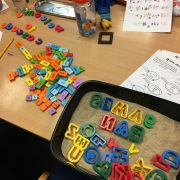
Here’s what Jackie did next! “I sent all our reports to them and suggested they watch our videos within the prison on YouTube. From this they could see how learning with our multi-sensory projects work, and the fun they had, whilst still learning, with props such as toothpaste, sand, water and masking tape, helping to engage with the hardest-to-reach prisoners.
Please watch our videos on YouTube for the Teachers TV: Literacy Behind Bars, Surprise Surprise and The Cascade Foundation – ThisWayoutUK. Seeing our work firsthand!
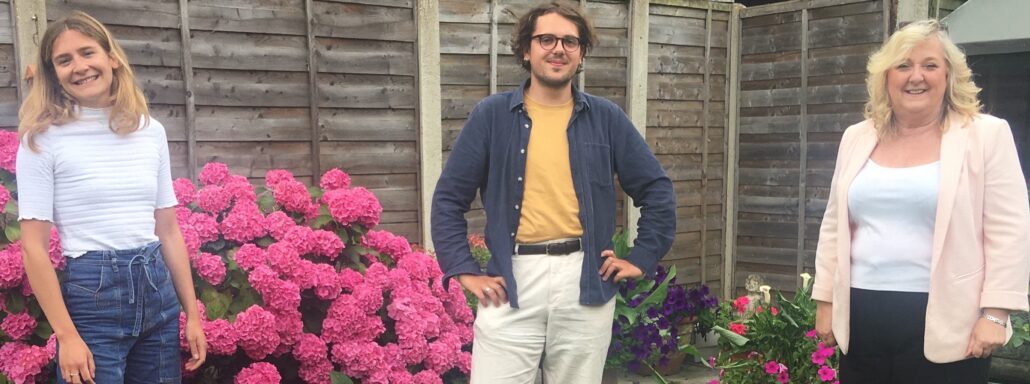
The interview was to happen in Sue Blackburn’s (Cascade Secretary) garden on the 14 July, we were to use long lapel mics to ensure 2m distance. The conversation started with the fact that the both of them were dyslexic and had been diagnosed at different times of their life. Stella was fortunate to have been diagnosed at about six years of age. Her parents could see that she was struggling and were able to get her diagnosed. Tobias was not diagnosed until later at university.

This is how we started the interview. They understood how my statement of dyslexia was due to me being at university at the age of 40 years old, my son Richard was then diagnosed at the Glamorgan University. We spoke about my childhood and the issues I faced every day, not understanding why I could not learn. Verbally I was top of the class but for my written work I was bottom of the class.
We spoke about my work at the Bullwood Hall a womens’ prison where I started my journey into the understanding of learning difficulties within the criminal justice system. I shared the story of a young girl during a maths class, I was to shadow a tutor in the classroom with nine learners The maths tutor was off sick, so I explained to the learners why I was volunteering in the prison and my own difficulties with learning. I noticed a young girl sitting on her own day-dreaming and I asked to have a look at her work. She showed me how she was trying to learn how to tell the time. I realised that she needed a multi-sensory approach, to play with the hand of the clock. I asked the teacher if they had any clocks to play with when I was taken outside the room and told that these girls are seeking attention and the teacher had already shown her.
I asked if anybody had the time to sit with these prisoners to find out if any of them had dyslexia or any learning difficulties. This angered the teacher and she walked back into the classroom. I then shadowed the same teacher during an English class. I spoke about my own learning difficulties and a young girl admitted that she too was diagnosed with dyslexia. The teacher shouted at the learner because she had not shared this with the teacher. Working within the womens’ prison I could see that learning difficulties with the learners was not being addressed. The learners were clearly becoming frustrated with the teaching and this resulted in many kickoffs within the classrooms. Sometimes I would be teaching a few prisoners, and I would be called out by the management and put with a prisoner who would be so angry because she had been taught for a whole year on lowercase d and b, when all that was needed was to help her with a different way of learning.
I found the whole situation in the education department absolutely appalling I could understand why so many of the young girls were frustrated and angry. I found that teachers had little idea how to teach or to come up with creative ideas to help these prisoners. This was my first experience of prison education and it motivated me to go into as many establishments as I could to see what other problems were happening with other learners with learning difficulties.
My journey was to take me across the world to show educators, tutors and coaches how to teach people with learning difficulties in a way they could understand, and to make learning fun.
The interview lasted for three hours, it was so great to talk about my experiences and share so many of my stories how learners and prisoners had completely changed their lives in such a short time.
I remember in Chelmsford prison there was a particular prisoner who was a self-harmer. He had placed a razor blade into the bottom of his lip where it would stay. On this particular day he had come from the induction wing. I was sitting at the table tennis table and invited him to have a chat with me about his life and why he was in prison. I asked if there was anything that I could do to help him. He explained how school was hard because he had been diagnosed with dyslexia when young. He could not read and write so he had been sent to a specialist school many miles away from his home. He told me that he was in prison because of drink and drugs. He then admitted to me that he had been sexually abused by a teacher at the school. Every time the police tried to open the case up against this teacher, the prisoner would hit the drink and drugs. I then asked if it was okay if I spoke to his mum. He agreed and his mum was so shocked to hear that her son had spoken to me about his school days, and she was so pleased that he had confided in somebody for the first time in years. She told me that altogether there were 40 children, and the investigation was ongoing. Over the years, 37 of the victims had committed suicide, they could not take the shame of what happened to them.
A little while later an officer told me how he knew that I’d spoken to this particular prisoner and how his whole demeanour had changed. He now wanted to engage with my programme, and he had spoken to the prison officers about the issues that had brought him into prison. This made it easier for the staff to have a better understanding of the problems he had suffered and were now able to work with him. He had been with us for 9 months, all the self-harming had stopped, he was now progressing with his learning and planned to go to college. He then was moved to another prison and all staff who had been involved were so pleased that he had stopped self-harming and he has not re-offended.
It was so great to share stories with Stella and Tobias. The tape was left rolling and the stories and the explanations of my methods of teaching and measuring learners self-esteem were listened to with much interest. I explained the importance of giving learners with learning difficulties confidence, showing them ways to use different techniques and tools to help themselves in their everyday life.
I was so honoured to be involved with the ‘Dyslexic Series’ for the BBC World Service. It is a two-part show involving language in childhood and then moving into adulthood. It has been produced and prepared by people also suffer with dyslexia.
Dyslexia
BBC World Service
6th October: Language and Childhood
Dyslexia literally means a “difficulty with words”. It is a condition that affects 1 in 5 of us worldwide. Educators, neurologists and linguists have different approaches, but research shows that the language we learn to speak and write has an impact. In this first programme Toby Withers reveals the challenges of learning English, with all its inconsistent rules and odd spellings. He talks about the subject of a ground-breaking study into bilingual dyslexic children – Alex – who is dyslexic in English but not in Japanese. From Hong Kong University he discovers how dyslexia in character-based language systems is different to dyslexia in English.
13th Oct: Into Adulthood – Jackie Hewitt-OBE
Reading and writing are fundamental tools in most societies, necessary for even the most basic of tasks. For the person with dyslexia ,this can cause an agonising disjuncture from an early age. Stella Sabin looks at the impact of the condition in adult life, and asks what difference it makes to know the name of what you are experiencing. Dyslexic people are disproportionately represented in low paying jobs, and in the US and the UK 50% of the prison population are dyslexic. She visits the UK intelligence and security organisation GCHQ who are positively recruiting dyslexic thinkers, who are able to find unusual and imaginative solutions to complex problems…like cracking codes.
Cast Iron Radio and Recording
392 Caledonian Road
London N1 1DN