
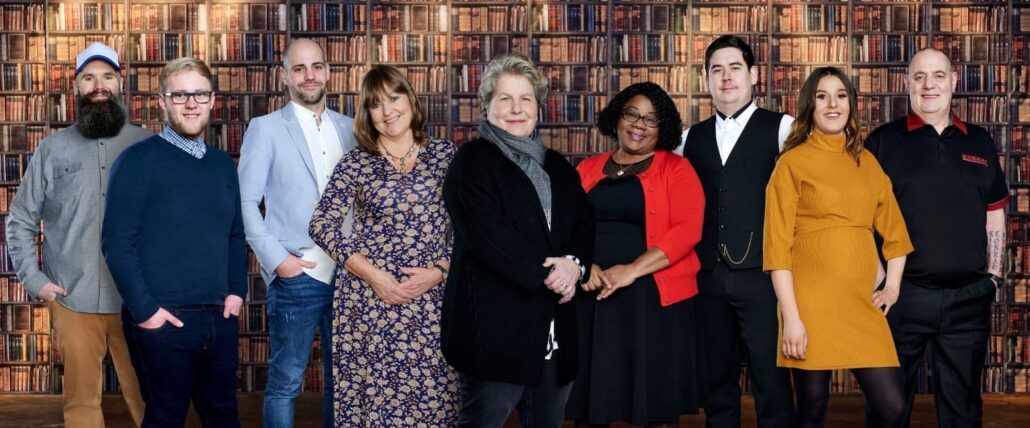
Jackie provides her expertise for new Channel 4 show ‘The Write Offs’
Imagine not being able to read a text message, get on a train or use the Internet. ‘The Write Offs’, an empowering and uplifting new two-part series hosted by Sandi Toksvig will explore Britain’s staggering low adult literacy rates and offer a group of adults who will have individual teachers in the different areas of the country.
Featuring an old town crier who hopes to one day write a thank you letter to all of those who have supported him, the young mum who wants to be able to help her son with his homework and others, their quest is to shed the shame and lift the stigma around illiteracy.
Each member of the group will receive one-to-one tutoring over a four-month period, during which they will also face a series of reading, writing and spelling challenges which will then lead to practical activities. The final test will be fronted by Sandy and held in front of an audience of family, friends and teachers – how will they all do?
In January 2007 my work within Chelmsford prison was being recognised at the House of Lords. Our six months project, funded by the mentoring firm Mentfor, was taking the world by storm. We had local and national TV & newspapers interested in our projects. One such reporter was Jessica Shepherd from The Guardian newspaper who wrote an article about ‘Spelling Out A Better Future: how Dyslexia is thought to affect more than half of those in prison and how special tutoring can turn these lives around.’
This led to many film producers contacting us to source a filming project. One such producer had taken their idea to Channel 4. They wanted to have a year’s project following my work with prisoners through the prison system and into the community. The management at Channel 4 were shocked because their researcher had not resourced our work, they had just started producing a program with Phil Beadle (Britain’s most famous teacher). So, our project was taken to Teachers TV: Literacy Behind Bars. An English teacher from Sittingbourne Community College visited Chelmsford prison to meet myself and to learn the range of radical teaching techniques, including the use of soap, sand and even toothpaste to help prisoners learn how to read and write.
In the summer of 2008, I had ended up in hospital and had to leave my work within the prison. The Channel 4 programme ‘Can’t Read, Can’t Write’ was to be shown over a three-week period. I sat and cried over each program. I was so shocked at how this teacher had not understood adults with learning difficulties and how he even swore at one of his learners. He was constantly tutting and sighing and furrowing his brow and telling everyone how passionate he was about his teaching. I just found that his approach was simply ill-natured dismissal and it didn’t seem like the kind of approach literally to bring about change with these learners.
Over the years my projects were being recognised on radio, television through ITV, the BBC and Victoria Derbyshire but I didn’t get to work with Channel 4 until 2019. A researcher had read about my work within Doncaster Prison on head injuries and they were in the middle of making a documentary on ‘What Makes A Murderer’, working with ex-offenders, analysing their psychology and biology. I was asked if I could have an interview with forensic psychologist, Vicky Thakordas-Desai who had spent 20 years interviewing prisoners and assisting their risk to society. The meeting was to take place with my son Stuart who had received a serious head injury. The outcome of this led to the start of our projects within the prison and community over the last 20 years.
Vicky, Paul (an ex-offender who had received a head injury when young) and a filming crew, started filming our conversation about prisoners who had suffered head injuries during their life, my son’s journey and how it has led to setting up our own charity. Vicky and the film crew were so impressed with my knowledge and understanding of prisoners with learning disabilities. We were not sure how this documentary was going to pan out and if any of our information would be used.
After a week I got a phone call from Shine TV asking me to come to London to do a video recording for a program on literacy. On the day of the filming, I drove from Doncaster to Camden. We had a quick chat with two of the producers and then I was put in front of a camera! They asked me a lot of questions about my work, myself and family. I was introduced to Lana Salah, executive producer for the Shine TV, when a very important phone call came through from Buckingham Palace and she had to leave the interview.
The last question was if I did get involved with this program what would I hope to achieve at the end of this project? I asked, “do you really want to know?” I spoke about the 45 to 50% of people who needed a different place of learning. There is a place for universities and colleges, but it’s not working for everyone, too many people are falling through the cracks and need help. Many agencies are pulling people from pillar to post, instead of making everything accessible under one roof. We need to be teaching differently for everyone. This filming had taken an hour and a half and was now on visual communication for the commissioning editors to review.
I was asked to become the onscreen and offscreen expert while also looking at their after-care package with the learners while waiting for the program to be aired. The first filming of the program was to take place in London. The host is Sandi Toksvig, her son, who is dyslexic meant that she had an understanding of some of the difficulties he had been through.
This was a lady who I had watched on many of her programs of QI and the British Bake Off, so it was a great honour to be introduced to her. On the first day of filming I went to shake her hand and she hugged me, smudging my makeup all over her shirt. She told me how she had seen my video recording and how passionate and enthusiastic I was about my work with the prisoners and ex-prisoners. She explained that over the years she had so many projects that had been pushed her way with no meaning, making no difference in the world. This project was so humbling.
The first filming of Sandi and myself was just so unreal. Here I was sitting on the settee facing her, talking about my projects with prisoners, children, families and how I have travelled the world helping thousands of people. I kept looking at her face, it was just so strange talking to such a famous person. She seemed genuinely interested in how I spent my life helping others. One film crew member came up to me after and said this is the first time he’s been on this particular filming and in that half an hour of me talking to Sandi he had understood the need for this program.
On the second day of filming I was taken by Lana Salah, executive producer, to meet with Gilly Greenslade and Ian Dunkley, commissioning editors for factual entertainment at Channel 4. I explained how my first documentary was with Teachers TV, and that I’d waited 13 years to be a part of one of their programs. It had felt such a honour that I was to take part in this program and share my knowledge of this particular subject. We spoke about the prototype Cascade Health & Learning Hub which I had designed and delivered courses and projects. The Swedish team had come over to England to observe the Hub and could see the impact our design was having on the prison/community. Their observation remarks were that this project was not just for England but for the world!!
The 13 of March was my last filming day on the program, and I managed to see four minutes and 30 seconds of the program. In the previous program, ‘Can’t Read, Can’t Write’, the emphasis was more on the teacher but in this film it’s all about the learners and their journey, how they have struggled and the frustration of leaving school without understanding their disabilities or why they couldn’t read and write.
It has been an honour to work on this program with fantastic producers, management, learners and of course Sandi Toksvig. What we need now is to get behind this program and show the devastation of peoples’ lives when they can’t read and write. We need passion, commitment, creativity and a contact focus to ensure that all children and adults are given the opportunity to be able to read and write. The estimated yearly cost of functional illiteracy to the UK economy is £37 billion a year (World Literacy Foundation). Adults with poor literacy skills are more likely to be unemployed or in low-paid jobs. There is a link between low levels of literacy and shorter life expectancy, depression and obesity. On top of that, there is a feeling of shame and secrecy.
Gilly Greenslade, Commissioning Editor for Factual Entertainment at Channel 4 said: “The Write Offs is a joyous way of tackling this important issue and will enable our learners to experience some of the pleasures that come with being able to read and write. We’re delighted to be working with Shine and Sandi Toksvig. Sandi’s humour and warmth coupled with the scale of the challenges make it a fantastic Fact Ent proposition.”
Sandi Toksvig added, “Working on The Write Offs has been one of the great honours of my working life. I have had the extraordinary pleasure of spending time with eight courageous people who have approached their deepest fears with humour and determination. Like me, I just know not only will everyone fall in love with them, they will review what they think they know about reading and writing. I believe the ripple effect from these eight will be astonishing.”
Lana Salah, Executive Producer for Shine TV said, “It has been emotional and inspiring to see the eight brave learners face their biggest fears and internal shame so publicly and we hope, as much as they do, that their journeys inspire the millions of other adults in a similar situation.”